
1. Project Introduction
1.1 Background
Road construction and maintenance activities are essential for national development, yet construction work zones remain among the most dangerous environments for road users and construction workers alike. In Liberia and across the sub-region, road crashes occurring within construction zones are frequently linked to poor traffic management, inadequate signage, unsafe worker behavior, and limited compliance with occupational health and safety standards.


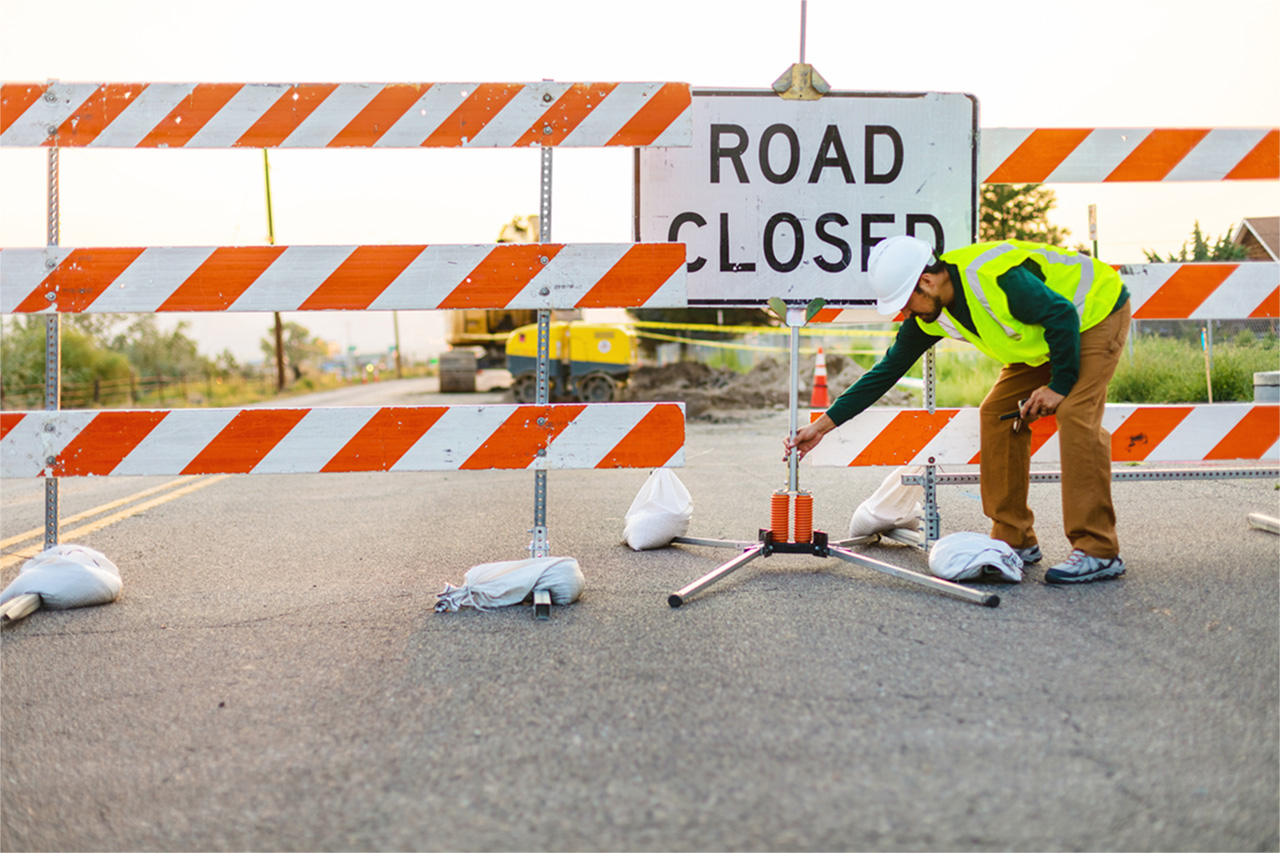
Road contractors, site supervisors, and equipment operators often operate in high-risk environments involving heavy-duty and earth-moving equipment, lane closures, deep curves, poor visibility, and unprotected work zones. These risks are compounded by skill gaps, limited access to road safety training, insufficient use of personal protective equipment (PPE), and weak understanding of road safety laws and legal compliance obligations.
1.2 Problem Statement
Despite ongoing investments in road infrastructure, road safety education for road contractors remains inadequate and inconsistent. Key challenges include:
- Lack of standardized road safety curricula specifically designed for road contractors
- Poor implementation of traffic management plans within active construction zones
- Insufficient and inconsistent use of safety gear and PPE on construction sites
- Weak hazard recognition and risk assessment capacity among site supervisors and workers
- Limited awareness of occupational health and safety legal requirements
- Inadequate communication with road users during construction activities
Without targeted intervention, construction zones will continue to contribute to road crashes, injuries, fatalities, environmental degradation, and loss of livelihoods — with lasting impacts on accident victims and their families.
2. Project Goal & Objectives
2.1 Project Goal
To reduce road crashes, injuries, and fatalities in construction zones by strengthening the capacity, knowledge, and compliance of road contractors with road safety, traffic management, and occupational health and safety standards.
2.2 Specific Objectives
- Improve contractors' understanding of road safety laws, guidelines, and legal obligations governing construction zone operations.
- Strengthen capacity in construction zone traffic management planning and implementation, including lane closures, diversions, and signage deployment.
- Enhance hazard recognition, risk assessment, and safe worker behavior across all categories of construction personnel.
- Promote consistent use of personal protective equipment (PPE) and safety gear among all workers on construction sites.
- Improve protection of road users, workers, and environmentally sensitive areas adjacent to construction zones.
- Support safer livelihoods and reduce the vulnerability of workers and accident victims by embedding a safety-first culture within contractor organizations.
3. Project Approach & Methodology
The RSERC project adopts a practical, competency-based training approach that combines classroom instruction, field demonstrations, and applied learning directly at or near construction sites. Training is designed to be immediately applicable to the specific risks road contractors face daily, and is aligned with national and international construction zone safety standards.
4. Project Components & Training Scope
4.1 Training Content Areas
The RSERC training curriculum is organized into nine core content areas, each addressing a distinct dimension of construction zone safety relevant to road contractors, site supervisors, and equipment operators:
Road Safety Laws & Regulations
National road safety legislation, contractor legal obligations, enforcement mechanisms, and liability under the Vehicle and Traffic Law and related construction regulations.
Construction Work Zone Safety Guidelines
National and international standards for safe construction zone design, buffer zones, worker positioning, equipment deployment, and public notification requirements for active road works.
Traffic Management Plans & Flow Control
Developing and implementing traffic management plans, controlling traffic flow through construction zones, and managing lane closures and diversions safely and efficiently.
Road Hazard Recognition & Risk Assessment
Identifying construction-related hazards, conducting formal risk assessments, applying mitigation measures, and documenting safety observations at road construction sites.
Worker Behavior & Safety Culture
Promoting safe worker conduct, building a site-level safety culture among road construction crews, managing unsafe behaviors, and embedding accountability across supervisors and field teams.
Heavy-Duty & Earth-Moving Equipment Safety
Safe operation practices for heavy road construction machinery, blind spot management, proximity hazards with workers on foot, and pre-operation equipment inspection protocols.
Personal Protective Equipment (PPE)
Selection, proper use, maintenance, and mandatory application of PPE on construction sites — including helmets, high-visibility vests, safety boots, gloves, and eye and hearing protection.
Occupational Health & Safety (OHS)
OHS legal framework for road construction, employer and worker responsibilities, incident reporting systems, health surveillance requirements, and first aid preparedness at active construction sites.
Environmental Protection in Construction Zones
Managing environmental impact during road construction, protecting adjacent communities and ecologically sensitive areas, controlling dust, noise, and runoff, and complying with environmental safeguard obligations.
4.2 Training Design Parameters
| Parameter | Detail |
|---|---|
| Training Days | Defined per contractor batch, aligned to project timelines and site schedules |
| Training Modules | Structured sessions covering all nine RSERC content areas across classroom and field components |
| Participants per Batch | Optimized for quality learning and active participation per group |
| Training Methodology | Classroom instruction, field demonstrations, case studies, and practical site exercises |
| Training Location | Project construction sites or designated training centers — selected for accessibility in consultation with road authorities and contractors |
| Certification | RSAI certificate of completion issued upon successful assessment |
5. Project Organization & Staffing
Implementing Organization: Road Safety Action International (RSAI)
RSAI coordinates closely with a network of technical partners and institutional stakeholders to ensure curriculum credibility, site access, and multi-sector alignment throughout RSERC implementation:
| Role / Actor | Function |
|---|---|
| Trained Road Safety Personnel | Lead RSERC curriculum delivery, facilitate classroom and field sessions, and provide quality coaching throughout training batches |
| OHS Specialists | Contribute occupational health and safety content, conduct field demonstrations, and provide compliance guidance specific to road construction environments |
| Traffic Management & Engineering Experts | Develop traffic management plan content, support field exercises on lane closures and diversions, and advise on technical construction zone standards |
| M&E Officers | Conduct pre/post knowledge assessments, site compliance observations, data collection, and programme outcome reporting |
| Road Authorities | Provide national policy alignment, endorse contractor training requirements, and support integration of RSERC into road construction contract specifications |
| Project Owners | Mandate RSERC participation for contractors under funded road projects and provide site access for practical field training sessions |
| Contractor Associations | Mobilize member contractors for training participation, support scheduling, and promote RSAI certification uptake across the construction sector |
| Supervising Engineers | Coordinate field training site access, validate on-site compliance observations, and support post-training contractor monitoring |
6. Project Implementation Plan & Schedule
The RSERC project is implemented in four sequential phases. A detailed training schedule and timeline is developed per contract, aligned to specific road construction projects and confirmed contractor batch sizes.
7. Monitoring, Evaluation & Learning (MEL)
RSAI's MEL system for the RSERC project tracks performance from training outputs through to on-site behavioral change and safety compliance. Key indicators and tools are as follows:
Key Indicators
MEL Tools
- Pre- and post-training knowledge assessments for all participants
- Site inspections and field compliance observations by RSAI M&E officers
- Project progress reports and learning briefs shared with stakeholders
8. Financing Strategy
9. Sustainability
The RSERC project is designed from the outset for long-term sustainability, ensuring that improvements in construction zone safety outlast individual training cycles:
How RSERC Sustains Safety Beyond the Programme
10. Project Log Frame — Outputs, Outcomes & Impact
| Level | Statement | Indicators | Means of Verification |
|---|---|---|---|
| Impact | Reduced road crashes, injuries, and fatalities in construction zones; improved livelihood security for construction workers; safer road infrastructure delivery across West Africa | % change in crash incidents within construction zones over 3 years; % of trained contractors sustaining compliance post-certification | National crash databases; road authority incident records; project owner safety reports |
| Outcome 1 | Improved safety practices within construction zones among trained road contractors | % of trained contractors observed applying RSERC safety practices during post-training site inspections | RSAI site inspection reports; field observation records; M&E officer reports |
| Outcome 2 | Increased compliance with road safety laws and occupational health and safety standards among road contractors | % of construction sites demonstrating compliant traffic management plans, PPE use, and signage deployment after RSERC training | Site compliance checklists; supervising engineer reports; road authority records |
| Outcome 3 | Enhanced protection of road users, construction workers, and environmentally sensitive areas within construction zones | Reduction in reported user conflicts and worker near-miss incidents at RSERC-trained construction sites | Project owner incident logs; contractor safety reports; road authority records |
| Output 1 | Standardized RSERC training curriculum developed and approved | Curriculum documented, reviewed, and formally adopted by RSAI and road authorities | Curriculum documentation; stakeholder sign-off records |
| Output 2 | Road contractors, site supervisors, and equipment operators trained and certified under RSERC | Number of participants trained and certified per batch, per contract, and per country | Training records; RSAI certificate register; attendance registers |
| Output 3 | Traffic management tools, guidelines, and safety materials disseminated to participating contractors | Number of materials produced and distributed; number of contractors receiving tools | Distribution records; photographic documentation |
| Output 4 | Field follow-up and compliance support visits conducted at trained contractor sites | Number of post-training site visits per contract cycle | Site visit logs; compliance observation reports |
| Output 5 | MEL system operational and reporting on RSERC programme outcomes | Reports submitted per schedule; data quality assured and shared with stakeholders | MEL reports; project progress reports; donor reports |
| Activity 1 | Develop and finalize the RSERC training curriculum and materials | Curriculum produced and approved | Curriculum documentation; stakeholder consultation records |
| Activity 2 | Conduct stakeholder engagement with road authorities, project owners, and contractor associations | Engagement meetings held; agreements reached on training requirements | Meeting minutes; MOU and contract records |
| Activity 3 | Deliver RSERC training sessions by contractor batch | Sessions conducted; participants trained per batch | Training reports; attendance registers; assessment records |
| Activity 4 | Conduct post-training site inspections and compliance support visits | Site visits completed; compliance gaps identified and addressed | Site inspection reports; field observation records |
| Activity 5 | Monitor, document, and report on RSERC programme outcomes and lessons learned | Reports submitted on schedule; final evaluation completed | MEL reports; project completion reports; learning briefs |
11. Conclusion
Every road contractor trained is a work zone made safer for workers and road users alike.
Every traffic management plan implemented is a crash that does not happen.
Every construction site that meets safety standards is a public investment better protected.
Road Safety Education for Road Contractors is a high-impact, preventive intervention that protects road users, construction workers, and public infrastructure investments.
By strengthening contractor capacity and compliance, RSERC directly contributes to safer roads, fewer construction zone crashes, and sustainable infrastructure delivery across West Africa.
Partner With Us
We welcome partnerships with organizations committed to safer road construction and stronger contractor accountability:
Together, we can make every construction zone in West Africa a space where workers are protected, road users are safe, and infrastructure is built to last.